
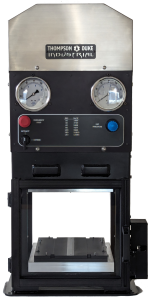
The MFP replaced the legacy LFP in the Thompson Duke lineup in 2026. It presses and caps filled cartridges with tighter force tolerance, improved serviceability, and a lower-maintenance pneumatic stack. Existing LFP owners continue to receive service support; new orders ship the MFP.
Calibrated 6.5-ton force spec with tighter working tolerance than the LFP. Cartridge compression reproducibility is the MFP's headline improvement over its predecessor.
Service-access panels on three sides, modular pneumatic stack that disassembles without tools, and common-part bill of materials across wear components. Service tickets resolve faster and downtime drops.
Redesigned pneumatic circuit with 40% fewer components than the LFP. Lower leak surface area, simpler calibration, longer time between maintenance cycles.
The MFP is a pneumatic press. Force rating, cycle time, and compatible cartridge sizes are the operative specs for production planning.
Built to CSA Code for Power Press Operation Z142010. GMP-compliant materials and workflow. Note: the MFP is pneumatic-only and does not carry electrical certifications such as cETLus or CE.
Cut sheet and product brochure are public downloads. Operations & maintenance manuals, startup & qualification documentation, and parts catalogs are available through the online store.
Fill → press, or fill → fasten for twist-on mouthpieces. The MPM is an alternative to pressing, not a step after the MFP.
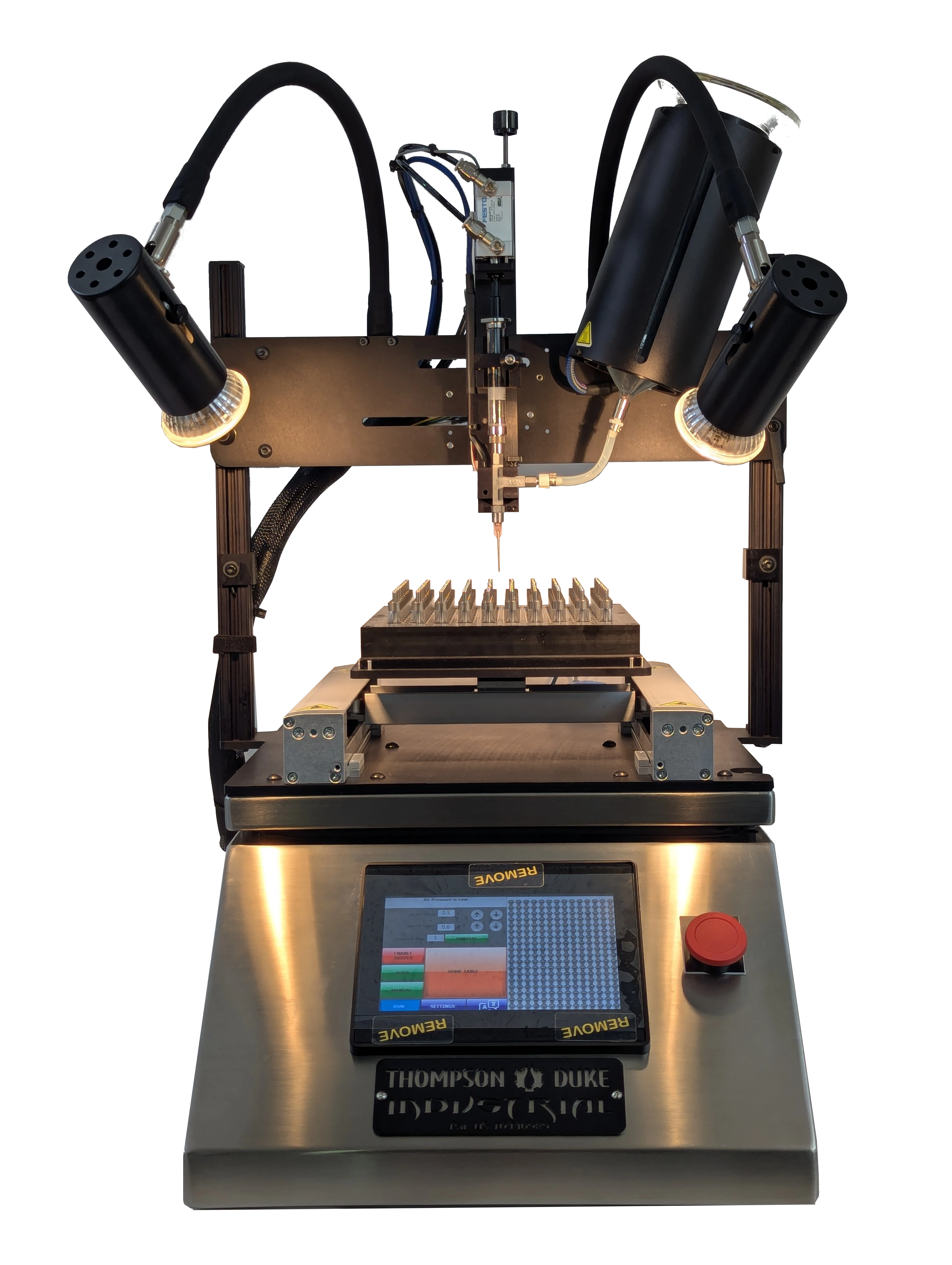
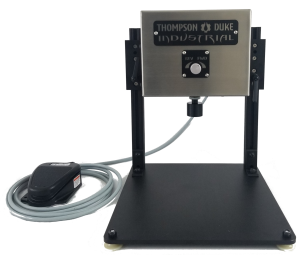

MFP is often quoted as part of a fill → press line. Tell us about your upstream (filling machine) configuration, and we'll quote the MFP that fits your production volume.